
Loading...
Serving Marion, IL and surrounding areas. (618) 422-0172
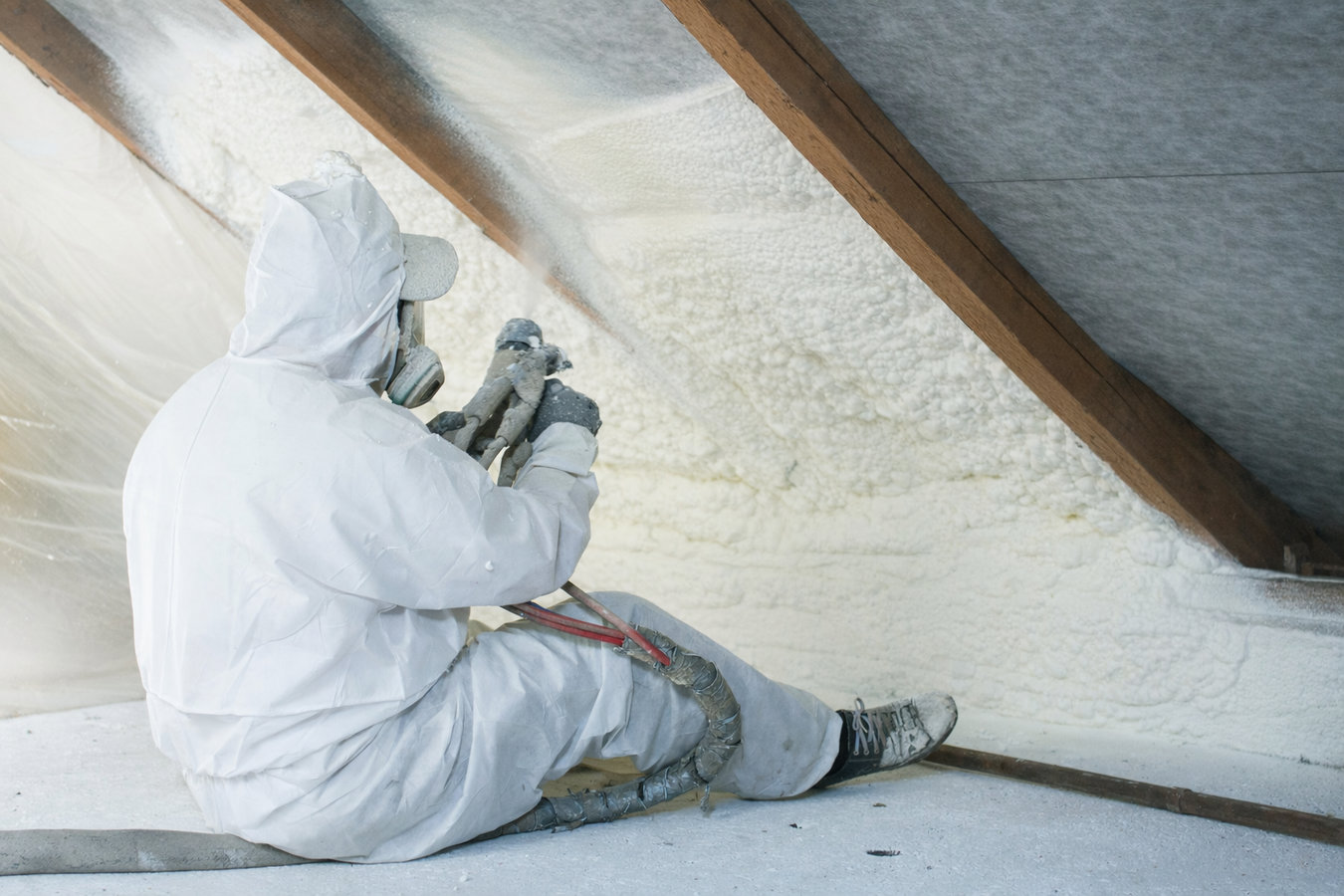
Cold floors, high energy bills, and musty crawl spaces often trace back to the same root cause. Closed-cell foam blocks air and moisture at the same time - one application, lasting results.
Closed-cell foam insulation in Marion, IL is a two-part liquid sprayed onto surfaces - crawl space walls, rim joists, attic rafters, or basement walls - where it expands and hardens into a rigid, dense layer. It insulates and seals air gaps in a single application. Most crawl space and attic jobs are complete within a single workday.
What makes closed-cell foam stand apart from fiberglass or blown-in insulation is that its sealed cell structure also acts as a vapor barrier - blocking moisture from passing through, not just slowing it. In a climate like Marion's, where summers are hot and humid and crawl space moisture is a common problem, that combination is particularly valuable. Homeowners with Marion's older housing stock often see the biggest before-and-after difference of any insulation upgrade. If your project involves an unfinished basement rather than a crawl space, you may also want to review our spray foam insulation options to find the best fit for your specific situation.
Properly installed closed-cell foam does not sag, settle, or absorb moisture the way fiberglass can over time. Most manufacturers and industry groups say it can last the lifetime of the building when installed correctly and left undisturbed.
If walking across your kitchen or living room floor in January feels noticeably cold - even when your thermostat is set to a comfortable level - that is often a sign that cold air is moving freely through an uninsulated crawl space below. This is one of the most common complaints from Marion homeowners with older crawl space homes, and one of the clearest signs that insulation work is overdue.
Southern Illinois summers and winters both push heating and cooling systems hard. If your Ameren Illinois bills jump dramatically in July and again in January - more than you would expect for a home your size - poor insulation is one of the most likely causes. A home that is well-sealed and well-insulated holds its temperature more steadily, which means your system runs less often.
Hold your hand near an electrical outlet on an exterior wall on a cold day. If you feel cool air moving, outside air is finding its way in through gaps in the wall. The same is true for drafts along baseboards or around window frames. These are signs that your home's air barrier has gaps - and closed-cell foam is one of the most effective ways to seal them.
In Marion's humid summers, moisture collects under homes with uninsulated or poorly sealed crawl spaces. That moisture feeds mold and mildew, which often produces a musty odor that works its way up into the living space. If you notice that smell - especially after a stretch of humid weather - it is worth having a contractor assess your crawl space before the problem gets worse.
We apply closed-cell foam in the areas where it performs best - crawl space walls and floors, rim joists, attic rafters, basement walls, and exterior wall cavities when access allows. Crawl spaces are one of the most common projects we handle in Marion because so many homes in this area were built on crawl space foundations. When the crawl space walls and rim joists are sealed with closed-cell foam, cold air stops moving freely under your floors and humid summer air no longer has an easy path into the space. Many homeowners also ask about open-cell foam insulation as an alternative for interior spaces where moisture resistance is less of a priority and the lower cost is attractive.
For rim joists in particular - the band of wood where your floor meets the foundation - closed-cell foam is one of the cleanest solutions available. It fills the irregular shape completely, sticks to the surface, and does not shift or sag over time the way cut-and-cobble foam board can. We also pair closed-cell foam with spray foam insulation projects when the application involves larger surface areas where both high R-value and air sealing are priorities.
Best suited for homes where cold floors and crawl space moisture are the primary complaints - the most common installation in Marion.
The right choice when you want to convert an attic to conditioned space or prevent ice dams from forming along the roofline.
Ideal for Marion basements being finished as living space, where the foam seals and insulates the concrete perimeter in one application.
For homes where wall insulation is being added during a renovation, closed-cell foam in the cavity delivers high R-value in a thin profile.
Marion sits in the southern tip of Illinois, where summers regularly push into the 90s with high humidity and winters bring sustained cold snaps well below freezing. That climate combination means your home's insulation is working hard in both directions - keeping heat out in July and keeping it in during January. Closed-cell foam's ability to block both air movement and moisture makes it especially well-suited to this climate, more so than in milder parts of the state. Marion's residential neighborhoods also include a significant number of homes built in the 1950s through 1970s, many of which have crawl spaces with little or no insulation and rim joists that are completely open to outside air. If your home was built before 1980, the improvement after a closed-cell foam installation is often dramatic.
Energy costs in southern Illinois give insulation upgrades a faster payback than in many other parts of the state. Ameren Illinois serves Marion and the surrounding area, and southern Illinois homeowners tend to run both heating and cooling systems hard due to the climate extremes. Homeowners in Murphysboro and Carbondale face the same climate pressures and housing stock as Marion, and we serve both communities. The Illinois Home Weatherization Assistance Program also offers income-qualified homeowners help with insulation costs - worth checking before you pay out of pocket.
We ask a few basic questions - what area of the home you want insulated, roughly how old the home is, and whether you have noticed specific problems like drafts or high energy bills. We respond within one business day and schedule an in-person visit so we can measure the space and look at what is already there.
We walk through the area to be insulated, measure the square footage, and check for any moisture issues or structural concerns that need to be addressed first. You receive a written estimate before anyone asks you to commit to anything - that estimate spells out the work, the materials, and the total cost.
Before installation day, clear stored items out of the area if possible and make sure the crew can get equipment in. You will also need to plan to be out of the home - along with pets and plants - for the duration of the spray and for a few hours afterward while the foam finishes curing. Your contractor will give you a specific re-entry time.
The crew applies the foam in controlled passes and it hardens within seconds. A typical crawl space or attic job is complete within a single day. After the re-entry window, we walk you through the finished work so you can see exactly what was done and ask any remaining questions before we leave.
We walk your crawl space or attic, explain what we recommend, and give you a written quote - no obligation and no pressure.
(618) 422-0172Closed-cell foam requires heated proportioner equipment and a crew that understands how to apply it in layers to reach the correct thickness. A rushed or undertrained application produces thin spots and gaps that show up as cold and moisture problems later. We use proper equipment and take the time to do each pass correctly.
We inspect for moisture before any foam goes on. In Marion, where crawl space dampness and clay-soil moisture are genuine risks, this step is not optional. Spraying foam onto a wet surface or over active water intrusion traps the problem rather than fixing it. A contractor who skips this check is one to be cautious about.
Most of the crawl spaces and attics we work in are 40 to 70 years old. We know what to expect in homes of that era - low clearances, irregular joist spacing, old wiring to work around - and we come prepared. Local experience shows up in the quality of the finished installation, not just in conversation.
The Spray Polyurethane Foam Alliance sets health and safety standards for spray foam installation and re-entry windows. We follow those standards on every job, and we give you a specific re-entry time before we start - in writing if you ask for it. Your family's safety during and after the installation is not something we leave to guesswork.
Closed-cell foam is one of the most effective insulation materials available, but the quality of the installation determines whether it performs as advertised. Working with a crew that follows recognized industry standards - and gives you a written estimate and a verified re-entry window - is what separates a job that holds up for decades from one that creates problems. The Spray Polyurethane Foam Alliance and the U.S. EPA both publish guidance on proper installation and safe re-entry practices - standards we apply to every project in Marion and the surrounding area.
A softer, more affordable foam option suited to interior walls and ceilings where moisture resistance is less critical than in crawl spaces.
Learn MoreOur full spray foam service covers both closed-cell and open-cell applications across attics, crawl spaces, walls, and rim joists.
Learn MoreCrews in Marion are booking fast for the season - reach out now and lock in your installation date before the cold sets in.