Loading...
Serving Marion, IL and surrounding areas. (618) 422-0172
Marion Insulation has served Du Quoin, IL homeowners with home insulation, spray foam, attic insulation, and crawl space vapor barriers since 2015. We know Perry County housing and respond to every new inquiry within one business day.
Most homes in Du Quoin were built during the coal-mining boom years and have never had a full insulation assessment. Treating the whole home - attic, crawl space, rim joists, and walls where accessible - together produces far greater comfort and energy savings than addressing one area at a time. See our home insulation services.
Du Quoin attics in homes from the 1920s through 1950s often have original insulation that has settled to an inch or less, and some have none at all. Southern Illinois summers push heat through an under-insulated attic floor directly into living spaces, while winter heat loss through the same ceiling makes HVAC systems run constantly to keep up.
Perry County clay soil holds water near foundations long after spring rains pass, and Du Quoin crawl spaces without insulation transfer that cold and moisture into the floor above all season. Older wood-frame homes in Du Quoin are particularly vulnerable because original construction left floor joists in direct contact with uninsulated, damp air.
Du Quoin receives 4 to 5 inches of rainfall in April and May alone, and clay soil keeps that moisture near the foundation for weeks. A vapor barrier separates the damp soil from the floor structure above, protecting wood joists and reducing the musty smell that homeowners in older Du Quoin neighborhoods often assume is simply unavoidable.
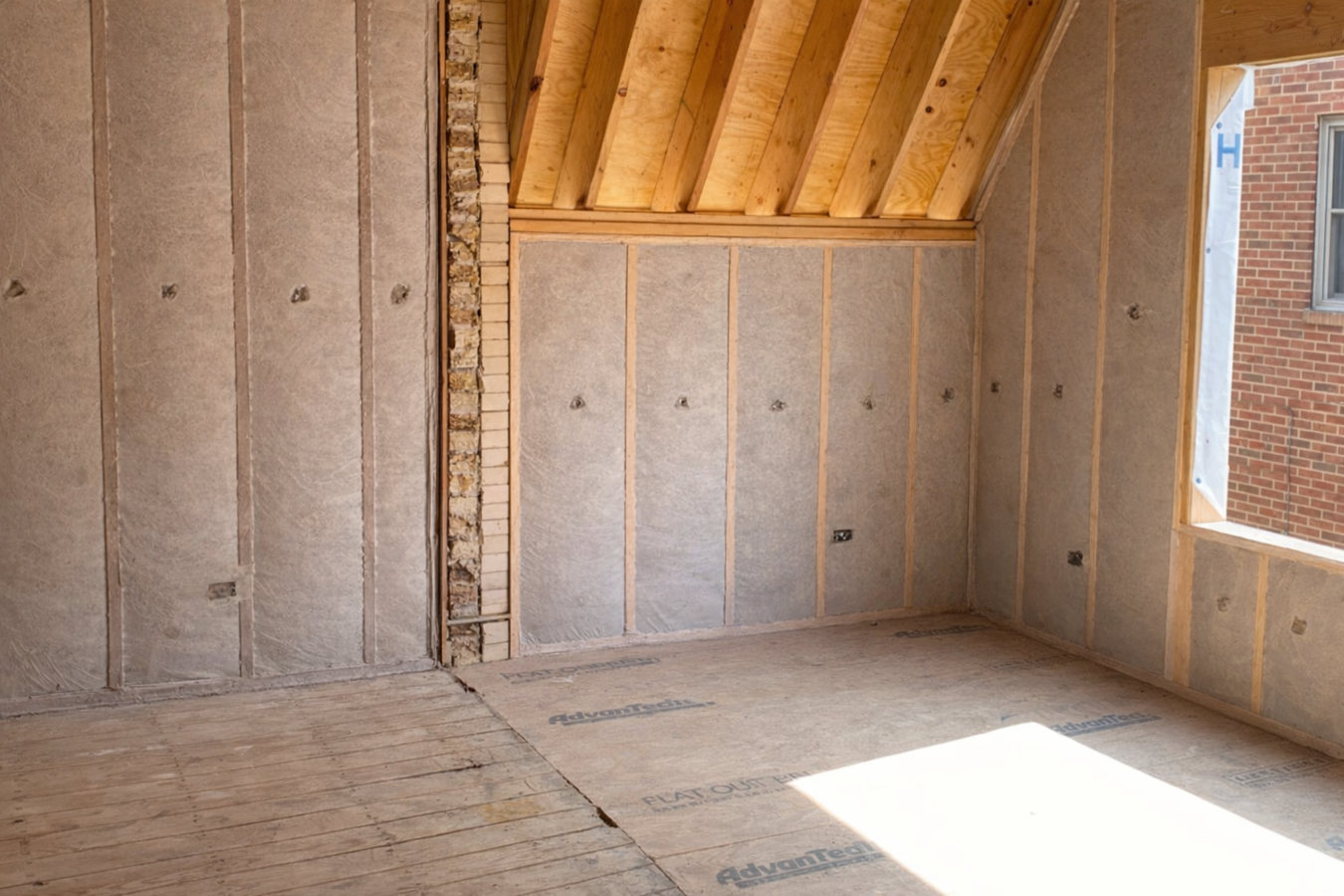
Wood-frame Du Quoin homes from the early and mid-1900s have rim joists and wall cavities with gaps and voids that standard batt insulation cannot fill completely. Spray foam bonds directly to framing members and seals air infiltration and insulation in one step, making it the most efficient solution for the irregular cavities common in older Du Quoin construction.
Du Quoin homes built before modern building codes have large open bypasses around chimneys, plumbing stacks, and electrical chases that let conditioned air flow freely into the attic or crawl space. Sealing those pathways before adding insulation is essential - without it, new insulation materials perform well below their rated R-value because warm air is simply moving around them.
Du Quoin has been a community since the mid-1800s, and its housing stock reflects that long history. Most homes in the city were built between the 1920s and 1950s - the years when Perry County coal mining employment was at its peak and residential construction was keeping pace with a growing workforce. Those homes were built to be practical and durable, not thermally efficient. There were no insulation requirements in residential building codes of that era, and any insulation that was added later has almost certainly settled or degraded significantly. The result is a city where a large share of the owner-occupied housing stock is losing conditioned air through the attic, rim joists, and crawl space year-round.
Perry County sits on clay-heavy soil that expands when it absorbs water and contracts when it dries out. That seasonal movement is hard on older foundations, and it keeps moisture near the soil surface around Du Quoin homes for weeks after heavy spring rains. Du Quoin summers are hot and humid, with stretches above 90 degrees Fahrenheit in July and August - and that humidity works its way into every uninsulated or poorly sealed space in an older home. Addressing insulation and moisture control together, rather than one at a time, is the most effective approach for Perry County homes that have lived through decades of this climate cycle.
Our crew works throughout Du Quoin regularly, and we understand the local conditions that affect insulation work here. The older neighborhoods near downtown Du Quoin - the wood-frame two-story houses and bungalows that line the residential streets a few blocks from the Du Quoin State Fairgrounds - are the homes we most often work on. They share a recognizable set of characteristics: low attic R-values, unsealed chimney bypasses, and crawl spaces that have been taking on moisture since long before vapor barriers were a standard part of construction.
Properties on the outskirts of Du Quoin often sit on larger lots with more open ground around them, and those homes tend to have higher crawl space moisture levels because of the slower-draining Perry County clay that surrounds the foundation on all sides. We adjust the vapor barrier and insulation approach based on those site-specific drainage conditions rather than treating every job the same way. Homeowners in Du Quoin who are near the rural roads heading out toward Rend Lake to the east often have these edge-of-town drainage considerations that are worth checking during an assessment.
We also serve Carbondale, IL to the south and Benton, IL to the east. If you are in Du Quoin and want a straightforward assessment of what your home needs, call us directly.
Reach us by phone or through the contact form. We respond to every Du Quoin inquiry within one business day and can typically schedule an on-site visit within the same week.
We visit your Du Quoin home, inspect the attic and crawl space, check for air bypass locations, and look at moisture conditions. The estimate is free and includes a clear price before you commit to anything - no surprises after the work starts.
Attic insulation is typically done in a single day. Crawl space vapor barrier and insulation installations run one to two days depending on the size and access conditions. You can stay home during the work - only the immediate work area needs to be clear.
Before we leave, we walk through the completed work with you and answer any questions. If anything comes up after the job, call us directly and we will handle it.
We serve Du Quoin and Perry County. Free on-site estimates with no obligation, and a reply within one business day.
(618) 422-0172Du Quoin is a city of around 5,700 people in Perry County, in southern Illinois, and is the largest city in the county. The community has its own distinct identity built around the Du Quoin State Fair, held every August at the Du Quoin State Fairgrounds on the south side of town - an event that draws visitors from across southern Illinois and is one of the most recognizable things about the city to anyone in the region. The housing stock is primarily single-family, owner-occupied homes built in the first half of the 20th century, when Perry County coal mining employment was strong and residential construction was active. Most homes sit on modest in-town lots, with the city center anchoring the older, denser residential neighborhoods. Carbondale, IL to the south is a regional hub that many Du Quoin residents use for shopping, medical care, and larger services.
Properties on the edges of Du Quoin and in the surrounding Perry County area often sit on larger lots than the in-town homes, and some include outbuildings or gravel driveways on clay-heavy soil that drains slowly after rain. The rural roads heading east toward Rend Lake pass through Perry County farmland and connect Du Quoin to the broader southern Illinois region. Du Quoin High School and its Blackcats athletic program are a central part of local identity, and the school calendar shapes the rhythm of daily life in the city as it does in most small Illinois towns. Benton, IL in Franklin County is another community we serve often, and its homeowners face similar older housing stock and clay-soil conditions to those in Du Quoin.
Seal gaps and maximize energy efficiency with professional spray foam insulation.
Learn MoreReduce heat loss and lower energy bills with properly installed attic insulation.
Learn MoreFill hard-to-reach cavities quickly with blown-in insulation for complete coverage.
Learn MoreKeep your home comfortable year-round with whole-home insulation solutions.
Learn MoreSafely remove old or damaged insulation to prepare for a fresh, effective installation.
Learn MoreProtect your floors and foundation from moisture and cold with crawl space insulation.
Learn MoreImprove comfort and soundproofing with expert interior and exterior wall insulation.
Learn MoreStop drafts and energy waste by sealing air leaks throughout your home.
Learn MoreEliminate cold floors and moisture issues with professional basement insulation.
Learn MoreAchieve superior R-value and moisture resistance with closed-cell foam insulation.
Learn MoreEnjoy excellent soundproofing and thermal performance with open-cell foam insulation.
Learn MoreMeet energy codes and improve building performance with commercial insulation services.
Learn MoreBlock moisture and protect your home structure with a professional vapor barrier.
Learn MorePrevent condensation and moisture damage with expert vapor barrier installation.
Learn MoreStop heated and cooled air from escaping through attic gaps and penetrations.
Learn MoreUpgrade your existing home insulation without major renovation or disruption.
Learn MoreOlder Perry County homes lose heat and cool air through aging attics and damp crawl spaces. Call now or submit a request and we will respond within one business day.